A GTM engineering agency for AI workflows that hold up in production
A GTM engineering agency builds the technical layer of go-to-market: data pipelines, integrations, automations and AI agents across sales, marketing and customer teams. LeanScale builds that layer inside the CRM and tools you already run, starting with workflows whose output can be checked. Then the same embedded operators keep it running.
Rated 4.9 / 5 on G2. 100+ growth-stage B2B SaaS partnerships, including Mistral AI, Chainguard, AssemblyAI, factory.ai and Runpod.
Engagement
90-day rolling
Team
Dedicated pod
Project cycle
4 to 12 weeks
Ad hoc support
Uncapped, same-day SLA
We build the AI GTM layer inside the systems you already run: agents, workflows and automations on clean CRM data, with a human approving what matters. Then the same operators keep it running. This page is about what it takes for AI in go-to-market to survive its first quarter in production.
The definition
What a GTM engineering agency does
GTM engineering is the build layer of go-to-market (GTM): the data pipelines, integrations, automations and AI agents that make a sales and marketing process run without someone copying data between tabs. A GTM engineering agency builds that layer for you. The good ones also operate it, because an automation nobody watches breaks quietly.
Term
Agent
Software that reads data, decides on a next step and drafts or takes it.
Term
Workflow
The fixed sequence of steps around an agent.
Term
Enrichment
Adding missing facts about an account or a person from outside sources.
The work usually starts in outbound: research, enrichment and signal-triggered sequences. It should not stop there: the same engineering routes inbound leads, keeps account data clean, summarizes calls into the CRM, prepares reps for meetings and answers pipeline questions without a new dashboard.
LeanScale is an AI-native GTM agency: our operators already run GTM Ops inside client systems, backed by bespoke AI agents and playbooks built across hundreds of B2B SaaS deployments. GTM engineering is how we build, not a separate product.
Data readiness
Data readiness comes before any agent
An agent that reads a CRM full of duplicates, missing owners and free-text fields produces confident nonsense at machine speed. That is why most AI pilots in GTM look good in a demo and stall in production: the model was fine, the data was not.
Before we build an agent, we check four things in the CRM it will read.
01
Identity
One record per account and per person, with a rule for merging the rest.
02
Ownership
Every account and open opportunity has a current owner, so an agent's output reaches someone.
03
Structure
The fields the agent reads are picklists or numbers, not free text that means something different to every rep.
04
Freshness
Enrichment and activity data have a known update cycle, so the agent is not reasoning from last year.
Find out if your data is ready for AI: a read-only review of your CRM, with a ranked list of what to fix before any agent goes live.
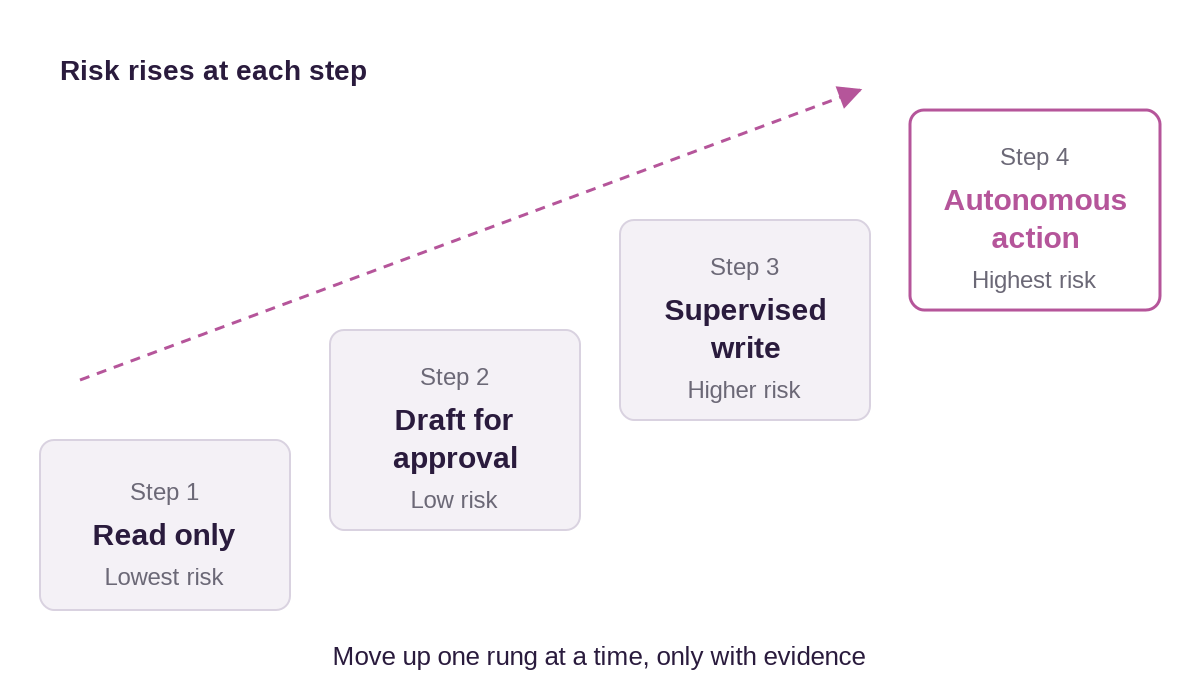
Reading the CRM is low risk; writing to it, emailing a prospect or changing a forecast input is not. Without a written rule, safe projects get blocked by a nervous security review and risky ones run anyway in someone’s personal account.
Workflows move up the ladder only with evidence: read-only first, then drafts a human approves, then supervised writes, and autonomous actions last, if ever. The structure follows the same idea as the NIST AI Risk Management Framework: name the risk, assign an owner, measure, and manage.
Most production workflows combine a general-purpose model with the systems the company already pays for.
02
Research and enrichment lead
Research and enrichment is the workflow most often live. Fully autonomous outbound is the least.
03
Governance is the bottleneck
Not the model. The study names unsanctioned tools and blocked projects.
The point for a buyer: ask any firm what its workflows look like in production, not in a demo.
What we build
The AI GTM workflows we build
We build in the order that works: workflows with a checkable output and no customer-facing risk first, autonomous actions last. Our published answer on which AI workflow to build first explains why research and enrichment come first.
01
Research and enrichment
Account research, contact enrichment and pre-meeting briefs written into the CRM, with source rules and exclusions so the data stays trustworthy. Where Clay is the right tool, our Clay agency team builds it.
02
Conversational access to CRM data
A model connected to your CRM or warehouse, so reps and leaders can ask pipeline questions in plain language and get answers that cite their records. The usual connector is the Model Context Protocol (MCP), an open standard for connecting AI applications to external systems. See how we approach connecting AI to the CRM.
03
GTM AI agents with a human in the loop
Agents for sales and customer teams that draft, summarize, flag and recommend, with a person approving any write to the CRM or any message to a customer. Examples: call summaries to fields, deal risk flags, champion briefs at qualification, renewal prep.
04
Signal-triggered plays
Outbound and expansion plays fired by real events, routed so a signal reaches a rep who can act on it. Most AI sales automation starts here, and it only works if routing is already sound.
05
AI for the revenue system itself
Data hygiene checks, field audits, documentation and report builds. The least visible use, and often the one that frees the most operator time.
How we work
How a GTM engineering engagement runs
We do not hand over a workflow and leave. A dedicated LeanScale pod works inside your Salesforce, HubSpot or CRM of choice on a 90-day rolling subscription. Projects run in 4 to 12 week cycles, with uncapped ad hoc support on a same-day SLA alongside them.
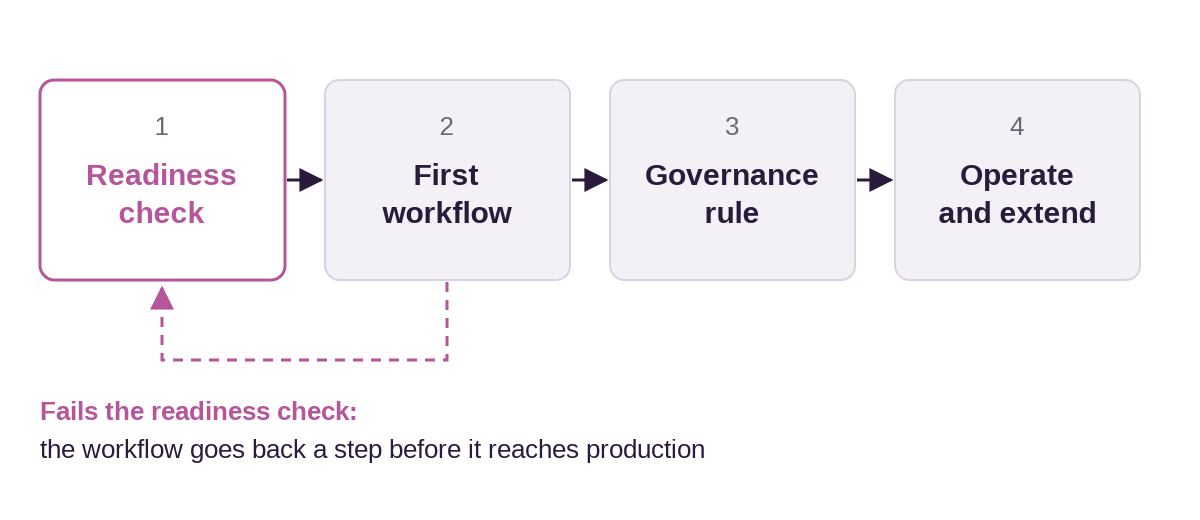
We build in this order. A workflow that fails the readiness check goes back a step.
01
Readiness check
The data readiness review above: what the agents will read and write, with a ranked list of what to fix before any agent goes live.
02
Build the first workflow
One workflow, with a checkable output, built in your stack and documented. It goes to production, not to a demo.
03
Govern
The one-page rule from the governance section, written for each workflow.
04
Operate and extend
We monitor what we built, fix what breaks, and add the next workflow in the queue. You own every system and every document.
Your options
How to choose a GTM engineering agency for a B2B startup
The GTM engineering company market is young and the labels overlap: outbound studios, RevOps consultancies that added AI, and embedded operations teams. Ask five questions before you shortlist.
01
Do they work beyond outbound?
If every case study is reply rates and meetings booked, the firm will not fix your routing, your data model or your reporting.
02
Who operates the workflows after launch?
Ask who gets the alert when a workflow fails overnight, and whether that is in scope.
03
What is their rule for agent writes?
A serious firm has a governance answer ready. A vague one means you will write it after the first incident.
04
Do you keep the systems?
Everything should live in your accounts and your documentation.
05
Can they show deployed work, not demos?
Ask for workflows in production at companies like yours.
AI and RevOps
Does AI replace your RevOps team?
No, and the evidence points the other way. AI raises the volume of systems work: every agent needs data it can trust, a field to write to, a rule about what it may do and someone to watch it. Our answer on whether AI replaces RevOps sets out the evidence.
Want to try our approach first? Connect your AI client to our free MCP server and ask it a GTM question; it answers from our playbooks and studies, with sources. There is more on AI in GTM in our knowledge hub.
Customer proof
Teams we work with
LeanScale has partnered with 100+ growth-stage B2B SaaS companies, including Mistral AI, Chainguard, AssemblyAI, Clio, factory.ai, Anrok, Integrate.io, Fountain and Runpod. Rated 4.9 / 5 on G2.
“They operate as true thought partners, with a strong point of view on AI-driven RevOps and a clear understanding of how to optimize within complex tech stacks.”
“They combine strategic RevOps thinking with hands-on execution, not just high-level recommendations. They help us actually design, document, and implement the systems we need.”
A GTM engineering agency builds the technical layer of go-to-market: data pipelines, integrations, automations and AI agents across sales, marketing and customer teams. LeanScale builds that layer inside your systems and then operates it.
02
Who can build AI agents and automations for our sales and marketing operations?
An embedded GTM Ops team like LeanScale. Our operators already work in your CRM and marketing systems, so the agents are built on data we have checked and governed by rules we write with you.
03
Are you an AI-native RevOps agency?
Yes. LeanScale describes itself as the AI-native GTM agency that runs your GTM Ops: embedded operators backed by bespoke AI agents and playbooks built across hundreds of B2B SaaS deployments.
04
Which tools do you build with?
Your CRM (Salesforce, HubSpot or your CRM of choice), general-purpose models, and orchestration and enrichment tools where they fit. Clay builds are handled by our Clay team; LeanScale is a Clay Studio Partner.
05
How long does it take?
Project cycles run 4 to 12 weeks inside a 90-day rolling subscription. The first workflow usually ships inside the first cycle.
06
What does it cost?
We do not publish a price. LeanScale works on a 90-day rolling subscription with a dedicated pod and uncapped ad hoc support. Talk to us for a scope.
Get started
Find out if your data is ready for AI
Start with the free GTM diagnostic: a read-only review of your CRM, with a ranked list of what to fix before any agent goes live.


 Mistral AI
 Chainguard
 AssemblyAI
 Clio
 Fountain
 RunPod
 Factory.ai
 Ocrolus
 Anrok
 Act-On
 GreyNoise
 Integrate.io
 CallRail
 Patlytics
 SpyCloud
 Scandit
 Coactive
 wealth.com
 OpenArt
 OnBoard